
Discover if You Have Dry Eye with the Schirmer Test
Dry eye is a common problem that can significantly affect comfort and quality of life. If you have experienced burning, itching, redness, or blurred vision in your eyes, you may be dealing with dry eye. One effective way to diagnose this problem is through the Schirmer test, a test that can provide valuable information about the amount of tears your eyes produce. In this entry, we will explore in detail what the Schirmer test consists of and how it can help you determine if you suffer from dry eye.
The Schirmer Test: What Does it Consist of?
The Schirmer test is an essential tool for evaluating eye health and diagnosing dryness problems. During the procedure, a small strip of filter paper is placed on the lower eyelid of each eye. This strip gently absorbs moisture for a specified period of time, usually around five minutes. The result of the test is the wet length of the strip, which indicates the amount of tears produced. A shorter wet length may indicate the presence of dry eye.
If you have experienced symptoms of dry eye such as burning, itching, redness, or blurred vision, don’t wait any longer to take care of your eyes! We invite you to try our mobile application specially designed to assess the possibility of dry eye from the comfort of your home, and then, once you know more about whether you have dry eye, make your appointment.
How can I do the test for dry eye?
Performing the Schirmer Test for Dry Eye:
The Schirmer test is a simple test that can be performed in an ophthalmologist’s office to evaluate tear production and detect dry eye. Below, I explain how it is carried out:
Necessary Materials:
- Filter paper strips specially designed for the Schirmer test.
- Clock or stopwatch.
Steps to Follow:
- Preparation: Wash your hands and make sure you are in a comfortable and relaxed environment before starting the test.
- Anesthesia Instillation: In some cases, the ophthalmologist may apply topical anesthetic drops to your eyes to minimize any discomfort during the procedure.
- Placement of the Paper Strips: The professional will ask you to tilt your head back and look up. Very carefully, they will place a sterile, thin strip of filter paper on the lower eyelid of one eye. The strip should be placed near the edge of the eyelid, without touching the cornea.
- Time Measurement: Once the paper strip is placed in the eye, the ophthalmologist will begin measuring the time with a clock or stopwatch. The paper will begin to absorb the tears.
- Wait: You should keep your eyes closed for a few minutes (usually around five minutes). During this time, the tears will be slowly absorbed by the paper.
- Removal of the Paper Strips: After the waiting time, the ophthalmologist will carefully remove the paper strips from both eyes.
- Measurement of the Wet Length: The professional will measure the wet length of each filter paper strip in millimeters. This measurement will reflect the amount of tears you have produced during the test time.
- Repetition in the Other Eye: The process will be repeated in the other eye, and the wet length of that paper strip will also be measured.
the Schirmer Test: What Results Can it Give Us?
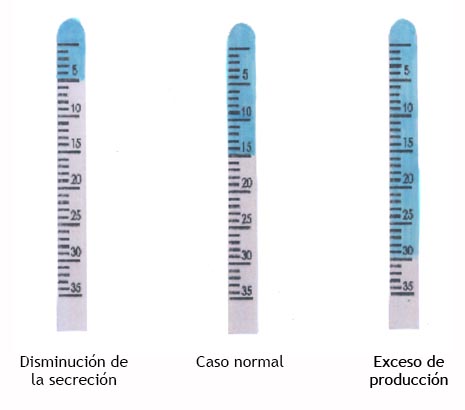
The result of the Schirmer test may vary depending on the wet length of the filter paper strip used in the test. The wet length of the strip is measured in millimeters and can provide information about the amount of tears produced by the eyes. Here are some possible result options that could arise when performing the Schirmer test:
- Normal Result: If the wet length of the paper strip is adequate, it is likely that there are no significant dry eye problems. This means that your eyes are producing an adequate amount of tears to maintain lubrication and comfort.
- Result of Mild Dry Eye: If the wet length of the strip is slightly less than expected, it could indicate mild dry eye. In this case, you may feel some mild symptoms of dryness, but they do not necessarily indicate a serious problem.
- Result of Moderate Dry Eye: A more significantly reduced wet length could indicate moderate dry eye. This could involve greater discomfort and more noticeable symptoms, such as burning, itching, and redness.
- Result of Severe Dry Eye: If the wet length is noticeably low, this could indicate severe dry eye. In this situation, you are likely to experience intense symptoms of dryness, burning, and significant discomfort in the eyes.
It is important to note that the result of the Schirmer test is only one part of the complete diagnosis of dry eye. An ophthalmologist will evaluate the results along with other factors, such as your symptoms, medical history, and possibly additional tests, to determine the level of dry eye and the best way to address it. It is always advisable to discuss the results with a visual health professional to obtain an accurate assessment and appropriate recommendations. But if you are at home and do not want to move, you can take a quick questionnaire with our App Stop Dry Eyes.
Download our Application Now
Our intuitive application will guide you through a detailed questionnaire to assess your symptoms and give you an initial idea about the presence of dry eye. In addition, we will provide you with useful tips for the care of your eyes and recommendations on when it is necessary to consult a visual health professional.
Steps to Get Started:
- Download the Application: Find our application in your mobile device’s application store and download it for free.

- Complete the Questionnaire: Answer some simple questions about your symptoms and your eye history.
- Receive Immediate Results: Based on your answers, we will provide you with a preliminary assessment of the possibility of dry eye and give you personalized advice.
Remember that the health of your eyes is important, and taking early action can make a difference. Download our application today and take the first step towards healthier and more comfortable eyes. Your eyes will thank you!
Identify the Symptoms of Dry Eye:
Dry eye can manifest in various ways. If you experience any of the following symptoms, you may have dry eye:
- Itching and Burning: Constant sensation of burning or itching in the eyes, which may be indicative of irritation due to lack of lubrication.
- Redness: Red eyes, caused by irritation and dilation of blood vessels in the conjunctiva due to dry eye.
- Foreign Body Sensation: Persistent sensation of having something in the eye, like a grain of sand.
- Blurred Vision: Dry eye can cause intermittent blurred vision, especially at the end of the day.
- There are many symptoms of dryness to see them all you can see it in the link.
What Do We Do if We Have Dry Eye?
Imagine that you have used our application to evaluate your symptoms and get a preliminary idea about the possible presence of dry eye. After completing the questionnaire, here is an example of how the results might be presented:
Evaluation Result: Possible Dry Eye
Reported Symptoms:
- Occasional burning in the eyes.
- Sensation of dryness and grittiness.
- Blurred vision at the end of the day.
Personalized Recommendations: Based on your symptoms and answers, it seems that you may be experiencing dry eye. While our application can provide a preliminary assessment, it is important to consult an eye health professional for a definitive diagnosis and specific recommendations. Here are some steps you can consider:
- Consult an Ophthalmologist: Schedule an appointment with an ophthalmologist for a complete evaluation of your eyes and an accurate diagnosis in the same application.
- Use of Artificial Tears: The health professional could recommend the use of artificial tears to relieve dryness and discomfort, and program the application to notify you about when to put the drops.
- Visual Habits: Adjust your visual habits, such as taking regular breaks when looking at screens and making sure to blink frequently. You can see more information about habits in the link.
- Hydration and Diet: Maintain adequate hydration and consider foods rich in omega-3 fatty acids, which can benefit eye health.
Remember, the symptoms of dry eye can vary, and it is essential to obtain a professional evaluation. Our application is only the first step towards the care of your eyes. Do not hesitate to schedule an appointment with a specialist to address your concerns and receive the appropriate treatment. The health of your eyes deserves the attention it deserves.







I found this article really interesting because it explains the Schirmer test and its role in checking for dry eye in a simple way.
Many people may ignore burning, watering or discomfort in their eyes, so this kind of information can help them pay attention to these signs.
Advanced Diagnostics can be useful in understanding the cause of ongoing eye discomfort and choosing the right care.
Kiran Eye Care takes a patient-focused approach with Best eyecare and Expert Treatments for different eye conditions.
A useful read that reminds us not to ignore ongoing eye discomfort and to get it checked when needed.